This week, if you drive to the East Norwalk train station expecting to catch a train, you won't find one. The platform closed on September 26 and stays closed through October 18, part of a four-year rebuild under the Connecticut Department of Transportation's TIME-2 program, the East Norwalk piece of the larger WALK Bridge Replacement project. Riders are being routed onto a free shuttle bus to South Norwalk for the duration. It's one of four scheduled three-week closures since the work began in March 2024, and the project still has work ahead on the station's southbound side before it wraps around 2027. When it's finished, East Norwalk gets platforms long enough for six-car trains, new canopies, and a dedicated drop-off lane it doesn't have today.
If you happen to be touring homes in East Norwalk this particular month, you're seeing the neighborhood at one of its more disruptive commute stretches of the decade, not its baseline. That gap between a snapshot and the underlying pattern shows up again almost everywhere you look in this city, and it's the same gap that trips up most Norwalk-area house searches: a single visible number standing in for something a lot more layered underneath it.
What the Median Actually Averages
Ask what a home costs in Norwalk right now and you'll get an answer that sounds precise. Recent data puts the citywide median sale price at $758,000 over the three months ending July 2026, up 16.6% from the same period a year earlier, with homes typically fielding six offers and selling in about 27 days.
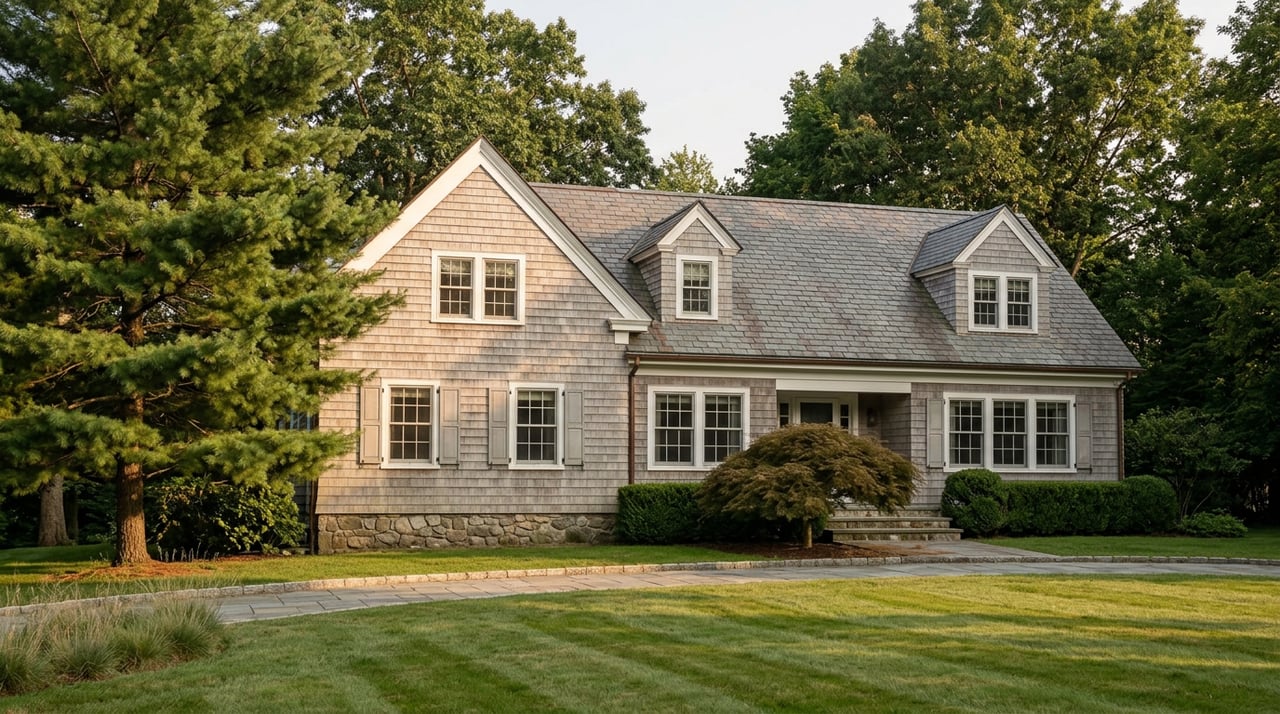
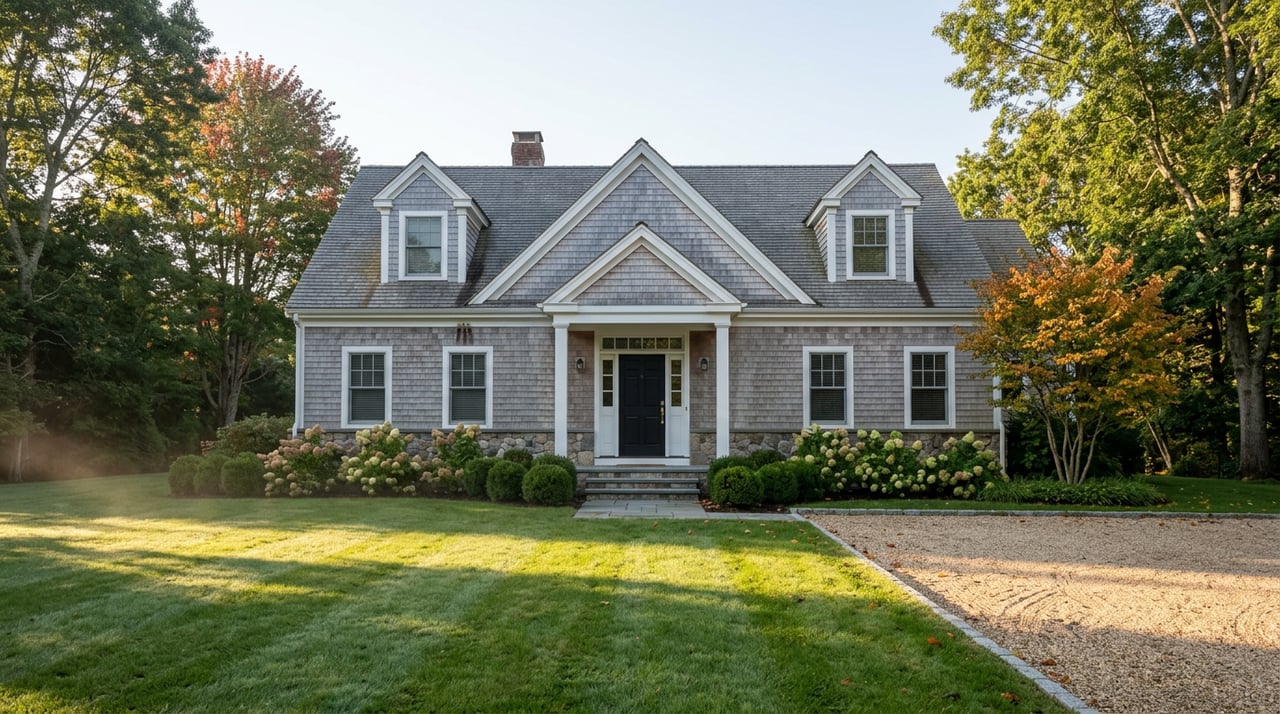
That number doesn't describe any single house you can actually walk into. Sub-neighborhood data from spring 2026 shows why. South Norwalk, where condos cluster around Washington Street and the SoNo arts district, was selling in a range of roughly $360,000 to $469,000. East Norwalk, the mid-century capes and split-levels near Calf Pasture Beach, sat closer to $701,500. West Norwalk's colonials, the part of the city that reads more like neighboring Wilton than downtown Norwalk, ran around $785,000. Rowayton, the coastal village on the Five Mile River that is technically still part of the city, was trading around $2,445,000.
That's roughly a sevenfold spread between the least and most expensive sub-markets, all inside one municipal boundary, all folded into the same headline median. A buyer anchored to "$758,000" will either get priced out of the sub-market they actually wanted or land somewhere they didn't mean to be.
Rowayton compounds the confusion because it doesn't behave like the rest of the city. It moves quickly and tends to sell close to or above asking, and the natural comparison set for it is Darien and Westport rather than East or West Norwalk, even though it sits inside the same city government as both. Fewer than two thousand homes sit inside its boundaries, and that scarcity is a big part of why its price per square foot runs in the same range as its Gold Coast neighbors instead of its city neighbors.
The Second Number the Listing Sheet Doesn't Show
Here's the part that surprises even buyers who've done their homework on sub-markets. Norwalk was assembled in 1921 out of what had been separate municipalities, and the merger left six taxing districts standing inside the new city instead of folding them together. South Norwalk became the Second Taxing District, Norwalk itself the First, East Norwalk the Third, and Rowayton the Sixth.
Rowayton's Sixth Taxing District still functions as a small government layered on top of the city's. Three elected commissioners run it, one seat up for election every two years for a six-year term, with a rule that no more than two commissioners can belong to the same political party. The district holds its own annual town meeting every March to approve a budget running around $2 million a year, funded by an extra levy on top of the citywide mill rate. By the district's own accounting, roughly 5% of a Rowayton homeowner's property tax dollars go to the district, with the remaining 95% flowing to the city.
That 5% buys something specific: the Rowayton Library, the Rowayton Fire Department, garbage and leaf pickup, street lighting, and the upkeep of Pinkney Park, Bayley Beach, the Rowayton Community Center, the Rowayton Arts Center, and the Rowayton train station and its parking lot. Two houses priced identically on paper, one inside the Sixth Taxing District and one outside it, will not carry the same annual tax bill, because one of them is paying into a second government the other isn't.
There's a timing wrinkle layered on top of that. Norwalk's Board of Estimate and Taxation approved mill rates for the fiscal year that began July 1, 2026, with increases of roughly 3% across all six taxing districts, smaller than the 3.8% to 4.9% the mayor's office had originally proposed. But the city's last property revaluation was in 2023, and rather than adjust the mill rate all at once to reflect the appreciation that followed, Norwalk chose to phase the new assessed values in over four years. Citywide home values have climbed roughly 22% since that 2023 revaluation. Not all of that increase has hit tax bills yet. Anyone budgeting a Norwalk purchase against today's tax bill is budgeting against a number that still has room to move before the phase-in finishes.
Why This Matters More Than a Spreadsheet Exercise
None of this is an argument against Norwalk. It's an argument against treating Norwalk as one thing. The city's own pitch, that it delivers more square footage and more coastline for less money than Darien or New Canaan, holds up as far as it goes. But "less money" changes meaning depending on which of the six districts a property sits in, and "the market" changes meaning depending on which sub-neighborhood is actually being compared.
The same logic applies to the train station closure that opened this piece. A buyer touring East Norwalk in mid-October, watching parking permits get shuffled to a lot on East Avenue and a shuttle bus stand in for a train platform, is collecting a data point about this month, not about the neighborhood's long-run commute profile. By the time the platform work finishes, East Norwalk will have a station built for six-car trains and a dedicated drop-off lane, features it didn't have when this construction cycle began in 2024. The inconvenience is real right now. It's also scheduled to end.
The practical move, whether the comparison is East Norwalk against West Norwalk or all of Norwalk against Darien, is to ask which specific sub-market and which specific taxing district before anchoring to any number seen on a portal. A parcel's assessor record shows its district. The city's tax collector's office can confirm the current combined mill rate for that parcel. Neither confirmation takes long, and both move the real monthly number more than most buyers expect going in.
Quick Questions Before You Compare Towns
Is Rowayton really taxed differently than the rest of Norwalk? Yes. Rowayton sits inside the Sixth Taxing District, one of six left over from Norwalk's 1921 municipal merger. Homeowners there pay the citywide mill rate plus a district levy, currently funding a budget of roughly $2 million a year for hyper-local services the rest of the city doesn't provide the same way.
Will the East Norwalk train station closure affect resale value? The current closure runs through October 18, 2026, and is one of four scheduled three-week closures under a project that started in March 2024 and is expected to finish around 2027. It's a temporary condition tied to a station upgrade, not a permanent change to the neighborhood's transit access.
Should I use the citywide median to set a budget? Treat it as a starting point, not an answer. The spread between Norwalk's least and most expensive sub-markets runs roughly sevenfold, so the number that actually matters is the one for the specific sub-neighborhood and taxing district under consideration.
Susan Vanech Properties works across Norwalk's sub-markets and taxing districts on a regular basis, from Rowayton's waterfront to West Norwalk's colonial streets. If you're weighing a Norwalk purchase against Darien, Westport, or another Fairfield County town and want the sub-market and taxing-district math run for a specific address, request a confidential valuation and we'll walk through what the number actually means there.